
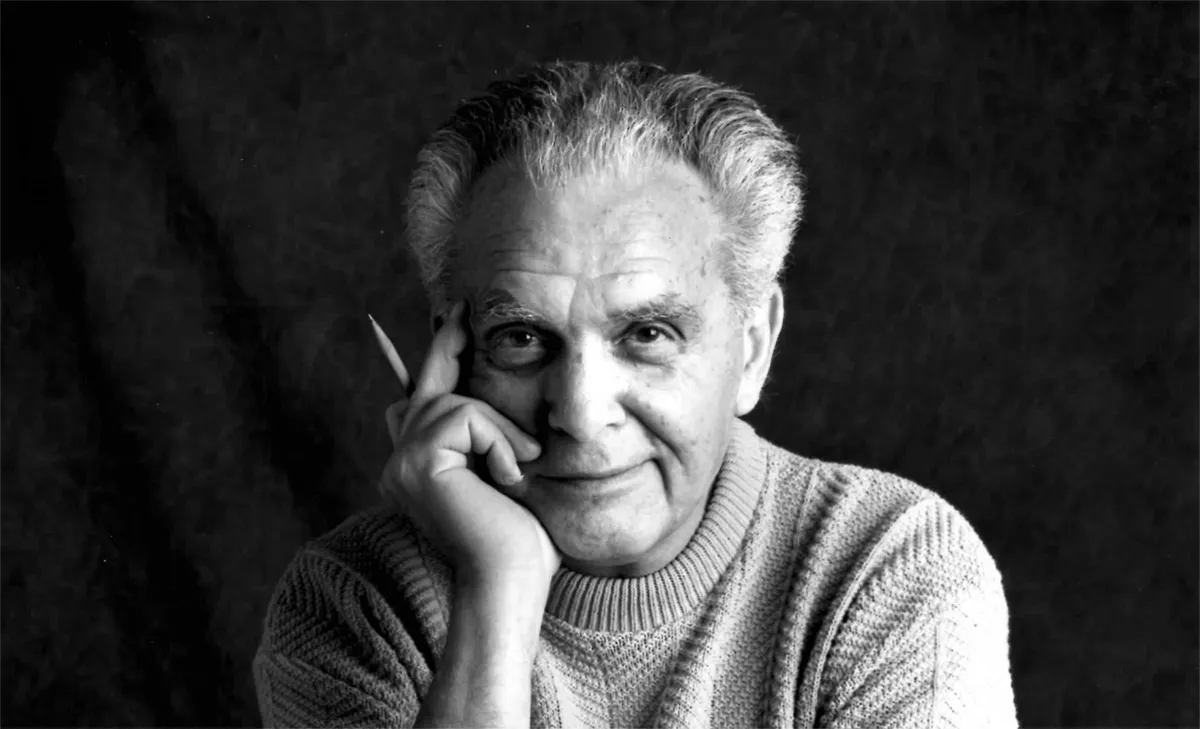

Jack Kirby
Kirby’s Life Forged Marvel’s Gods

Overview
This report provides a comprehensive, deep-dive analysis of the life and career of Jack Kirby (born Jacob Kurtzberg), a figure widely recognized as the primary architect of the American comic book industry. Spanning his early life in the tenements of New York’s Lower East Side, his harrowing service in World War II, his pioneering work in the romance genre, and his co-creation of the Marvel Universe and DC’s Fourth World, this document explores the intersection of Kirby’s personal trauma and his boundless creative output.
Special attention is paid to the mechanics of his production—his legendary speed and “factory” work ethic—as well as the specific creative controversies that defined his career, including the editorial censorship of the Black Panther’s racial identity and the acrimonious split with Stan Lee. Through a synthesis of historical records, interviews, and artistic analysis, this report argues that Kirby’s work was not merely commercial entertainment but a sophisticated form of modern mythology, forged in the crucible of 20th-century violence and aspiration.
Part I: The Crucible of the Lower East Side (1917–1941)
1.1 The Geography of Survival
To understand the kinetic energy that defines a Jack Kirby panel—the sensation that figures are bursting out of the frame, the raw violence of the impact lines—one must first understand the environment that produced Jacob Kurtzberg. Born on August 28, 1917, to Austrian Jewish immigrants, Kirby was raised in the teeming tenements of New York’s Lower East Side, specifically on Suffolk Street.
In the early 20th century, this neighborhood was one of the most densely populated places on Earth. It was an environment of crushing poverty and relentless proximity. A typical tenement flat might house seven or more family members in three small rooms, totaling perhaps 325 square feet. Privacy was non-existent; silence was a luxury. The streets were not thoroughfares but living spaces, crowded with pushcarts, peddlers, and humanity. Kirby described this environment as a “toreador” school, where a child had to learn to dodge ice wagons and aggressive crowds merely to navigate the block.
This spatial compression had a profound effect on Kirby’s artistic sensibility. In his later work, his characters are rarely small or distant; they fill the panel, often seeming too large for the world they inhabit. This “claustrophobic dynamism” can be traced directly to a childhood spent in spaces where humanity was stacked upon itself, struggling for room to breathe.
1.2 The Sociology of the Street Gang
The social structure of Kirby’s youth was tribal. Survival on Suffolk Street meant belonging to the “Suffolk Street Gang.” This was not a criminal enterprise in the modern sense but a neighborhood protection unit. Violent turf wars were common; Kirby recounted battles where rival gangs from Norfolk Street would cross the rooftops to bombard his block with bottles and rocks.
Fighting was, in Kirby’s words, “second nature”. He was a small child, but ferocious. He often found himself defending his younger brother, David, who was more fastidious and “fancy-dressed,” making him a target for local toughs. These street brawls served as Kirby’s anatomy classes. He did not learn the human form from static models in a quiet studio; he learned it by watching bodies collide, twist, and fall on the pavement. He observed the grimace of exertion, the torque of a punch, and the chaotic tumble of limbs. This “school of hard knocks” instilled in him a disregard for academic anatomical correctness in favor of emotional and kinetic truth. A Kirby punch feels real because it is drawn by a man who has thrown one.
1.3 The Gangster as Neighbor and Role Model
The Lower East Side of the 1920s and 30s was the domain of legendary organized crime figures like Charles “Lucky” Luciano and Meyer Lansky. To the young Kirby, these men were not abstract villains; they were the local success stories. In a neighborhood defined by powerlessness, the gangster represented agency. Kirby noted that one became a gangster depending on “how fast you wanted a suit”.
The “real” gangsters Kirby knew were distinct from the movie stereotypes; they were businessmen of violence, strictly “out for big money”. This proximity to organized crime complicated Kirby’s moral worldview. He admitted that his early ambition was to be a “crooked politician,” viewing corruption as the only viable ladder out of the ghetto. However, he also saw the brutality inherent in that life, a duality that would later inform his depictions of villains. Darkseid, the cosmic tyrant, acts with the heavy-handed authority of a mob boss, while the Thing (Ben Grimm) represents the rough-hewn, noble toughness of the street kid who didn’t turn to crime.
1.4 The Boys Brotherhood Republic: An Escape
Seeking a respite from the “thuggish compatriots” of the street, Kirby eventually joined the Boys Brotherhood Republic (BBR) on East 3rd Street. This organization was a self-governing “miniature city” where boys ran their own government, police force, and newspaper. It was a radical experiment in juvenile democracy intended to divert at-risk youth from the prison pipeline.
At the BBR, Kirby found a sanctuary where his artistic inclinations were not mocked but valued. He became the cartoonist and later the editor of the BBR newspaper. Yet, the duality of his nature persisted. Even within the safety of the BBR, he participated in “Fighting for Fun” boxing matches. An anecdote recalls him boxing a boy named Milt Cherry and losing—a rare admission of defeat for the scrapper. The BBR allowed Kirby to synthesize his street toughness with his intellectual and artistic ambitions, preventing him from becoming just another casualty of the neighborhood.
1.5 The Will Eisner Incident: Standing Up to the Mob
Perhaps the definitive anecdote of Kirby’s pre-war character occurred during his employment with Will Eisner, another titan of the comics medium. Eisner ran a “packaging” studio that produced comics for various publishers. In the rough-and-tumble business climate of the late 1930s, the comic industry was adjacent to, and sometimes intersected with, organized crime.
According to accounts, including Eisner’s autobiographical graphic novel The Dreamer, a group of gangsters attempted to extort the studio through a “towel service” racket—a common scheme where a business was forced to subscribe to an overpriced laundry service under threat of violence. When the gangsters arrived at the studio to intimidate Eisner, Kirby did not hide under his drawing board. Despite being a young employee, he reportedly rolled up his sleeves and charged into the lobby to physically confront the mobsters.
The gangsters, likely expecting a room full of passive intellectuals, were stunned by the aggression of this small, intense artist. They fled before the confrontation could escalate. This incident is crucial to understanding Kirby’s psychology. He essentially viewed fascists, bullies, and racketeers as the same species. Whether it was a Lower East Side shakedown artist or Adolf Hitler, Kirby’s response was identical: immediate, physical resistance. This attitude would manifest famously in 1941 when he and Joe Simon created Captain America, featuring the hero punching Hitler in the jaw on the cover—months before the U.S. officially entered the war.
Part II: The Soldier and the Scout (1943–1945)
2.1 The Draft and Deployment
In June 1943, as his career in comics was beginning to skyrocket with the success of Captain America and Boy Commandos, Kirby was drafted into the U.S. Army. He was assigned to Company F of the 11th Infantry Regiment, part of the 5th Infantry Division (the “Red Devils”).
While many creative professionals in the war effort secured “safe” jobs in the rear echelon—drawing training manuals, painting camouflage, or producing propaganda—Kirby ended up in the infantry. He landed on Omaha Beach in Normandy on August 23, 1944, approximately 2.5 months after D-Day. He arrived not as a celebrity artist, but as a replacement soldier, indistinguishable from thousands of others, walking into the meat grinder of the Western Front.
2.2 The Artist as Scout
Ironically, Kirby’s artistic talent did not save him from danger; it placed him directly in its path. When a lieutenant discovered that Private Kurtzberg was a professional artist, he did not assign him to draw portraits in the officers’ mess. Instead, he made Kirby a scout.
The logic was tactical. A scout needed to advance ahead of the main unit into unsecured territory, observe the enemy’s disposition, and return with accurate, hand-drawn reconnaissance maps. Kirby was tasked with infiltrating French towns that the Allies did not yet control, sketching the terrain, and marking the positions of German pillboxes, machine gun nests, and the feared “88” anti-tank guns.
Kirby later remarked, “If somebody wanted to kill you, they made you a Scout”. The job required him to be constantly exposed, often operating alone or in small teams. The skills required—visual memory, spatial awareness, and steady hands under pressure—were the same skills he used at the drawing board, now repurposed for survival. This experience fundamentally altered his art. When Kirby drew machinery, rubble, or explosions in later years, he was drawing from reference materials etched into his memory during these terrifying patrols.
2.3 The Battle of Metz and Horseshoe Woods
Kirby’s unit participated in the brutal campaign to take the fortress city of Metz. Specifically, he was involved in the crossing of the Moselle River at Dornot in September 1944. This operation was a tactical disaster. The American forces were pinned down in a small area known as “Horseshoe Woods” by relentless German artillery and counterattacks by SS Panzergrenadiers.
The conditions were apocalyptic. Kirby described the shelling as so intense that the air pressure from the passing rounds could be felt physically, ripping up the earth in “big clots”. Of the approximately 1,200 men who participated in the initial assault, fewer than 300 made it back across the river. Kirby was among the survivors, but the trauma of “60 hours in hell” was profound. He witnessed men being vaporized by artillery and drowned in the river. This experience of industrial-scale slaughter stripped away any romantic notions of war he might have held. His later war comics, particularly The Losers, would reflect this grim reality—war not as a glorious adventure, but as a chaotic struggle for survival.
2.4 The “Red Sheet” Incident
One of the most disturbing anecdotes from Kirby’s service involves a close-quarters encounter with the enemy. While scouting, Kirby reportedly entered a tavern in a French village, only to find three German soldiers already there. Realizing his dog tags identified him as Jewish, and that capture would likely mean summary execution, Kirby described a physiological reaction: a “red sheet” dropped over his eyes.
This “red sheet” describes a state of dissociative rage—a berserker state where conscious thought is suspended in favor of pure survival instinct. When Kirby regained his senses, the three German soldiers were dead, killed by his hand, likely with a knife he had wrestled from one of them. Whether this story is entirely factual or a crystallized memory of trauma, it speaks to the extreme psychological stress Kirby endured. It also provides a chilling context for the “uncontrollable rage” that characterizes many of his creations, most notably the Hulk and Orion of the New Gods.
2.5 The Physical Toll
The war ended for Kirby not with a parade, but with illness. During the winter campaign of 1944-1945, amidst the snow and mud, he developed a severe case of trench foot. His feet turned purple and necrotic, and doctors in a Paris hospital seriously considered amputation. He eventually recovered, though he would suffer from pain and sensitivity in his feet for the rest of his life. He was discharged in 1945 with a Combat Infantryman Badge and a Bronze Star. He returned to the United States a changed man: tougher, darker, and possessing a first-hand understanding of the fragility of civilization.
Part III: The Romance Innovator (1947–1958)
3.1 The Post-War Pivot
Upon his return to New York, the comic book industry was in flux. The superhero genre, which had thrived on patriotic fervor during the war, was entering a steep decline. Readers were weary of conflict; the atomic bomb had made the punch-ups of caped crusaders seem trivial. Kirby and his business partner, Joe Simon, realized they needed to innovate to survive.
In 1947, working for Crestwood Publications (Prize Comics), they invented a genre that would dominate the industry for the next decade: the romance comic.
3.2 Young Romance and the “Adult” Reader
Their flagship title, Young Romance, launched with a September 1947 cover date. It was a calculated risk. The cover prominently displayed the tagline: “Designed for the more adult readers of comics”. This was a brilliant marketing move. It signaled to older teens and young adults (particularly women) that this was not “kid stuff.”
The gamble paid off spectacularly. Young Romance #1 sold out its print run, achieving a staggering 92% sell-through rate. It sold millions of copies, vastly outperforming the superhero titles of the day. This success triggered a “Love Glut” in the industry, with every publisher rushing to produce imitators.
3.3 Themes and Sociological Significance
Kirby’s romance comics are often dismissed by modern superhero fans as “work for hire” fluff, but they were significant cultural artifacts. They were modeled on the “true confession” magazines of the era, utilizing first-person narration to create an aura of realism.
Key Themes in Kirby’s Romance Work:
- Class Anxiety: A recurring plot involved a working-class protagonist navigating the social mores of the wealthy, or hiding their humble origins to secure a partner. This reflected the fluidity and anxiety of the post-war American class system.
- The “Bad Boy” vs. Security: Stories often presented a binary choice for the heroine: the exciting, dangerous, often leather-jacketed “bad boy” versus the stable, boring, reliable provider. While the stories almost always moralized in favor of the stable choice, the artwork often lingered on the allure of the rebel, allowing readers a safe vicarious thrill.
- Domestic Realism: Unlike the cosmic voids of his later work, these stories were set in diners, living rooms, and front porches. This required Kirby to master the depiction of fashion, furniture, and, most importantly, subtle facial acting.
3.4 Artistic Evolution in the Romance Era
The romance period was a crucible for Kirby’s artistic development. The requirement to draw page after page of “talking heads” forced him to refine his layout and composition skills. He could not rely on explosions or dynamic action to carry the reader’s eye; he had to use glances, body language, and dramatic staging.
It was during this period that the “Kirby Style” began to harden into its mature form. He streamlined his rendering, moving away from the illustrative, feathery lines of the 1940s toward the bold, blocky, sculptural forms that would define the Silver Age. The “romance” faces—heavy-lidded eyes, full lips, intense gazes—would later be transplanted directly onto characters like Sue Storm, Jean Grey, and the Enchantress.
Part IV: The Marvel Revolution and the Speed of Creation (1961–1970)
4.1 The Factory of Ideas
By the late 1950s, the comics industry had contracted significantly. Kirby found himself at Atlas Comics (the precursor to Marvel), working with editor Stan Lee. What followed was a decade of unparalleled creativity that reshaped global pop culture. In rapid succession, they launched the Fantastic Four (1961), The Hulk (1962), Thor (1962), The X-Men (1963), and The Avengers (1963).
4.2 The Mechanics of Speed
The sheer volume of Kirby’s output during the 1960s defies modern comprehension. He was routinely penciling 10 to 15 pages of finished art per week, often while also plotting the stories. This speed was not a magic trick; it was a result of economic necessity and a unique cognitive process.
- No Roughs: Unlike most artists who painstakingly “rough out” a page with loose shapes before tightening the pencils, Kirby often drew straight through. He would start at the top left panel and draw to the bottom right, the composition fully formed in his mind before the pencil touched the paper.
- The “Factory” Work Ethic: Kirby treated his art table like a factory floor. He worked 12 to 14 hours a day, seven days a week. He viewed the work as manual labor, a perspective inherited from his father’s factory background. Perfectionism was the enemy of production; he famously said, “Damn perfection. You don’t have to be perfect. You are never going to do a Sistine Chapel, unless someone ties you to a ceiling”.
- Inking Variables: Because of his speed, Kirby rarely inked his own work at Marvel. This task fell to inkers like Joe Sinnott (whose slick, polished line defined the Fantastic Four) and Vince Colletta (who was notorious for erasing background details to save time). When Kirby did ink his own work, the result was rougher, grittier, and more textured—closer to the raw energy of his pencils.
4.3 Creation of the Icons
- The Fantastic Four: This was the breakthrough. Kirby and Lee created a team that was a family, bickering and dysfunctional. The Thing (Ben Grimm) was Kirby’s avatar—a cigar-chomping, tough-talking Jewish kid from Yancy Street (a stand-in for Delancey Street) trapped in a monstrous form.
- The Hulk: Drawing on the Jewish folklore of the Golem and the trauma of the atomic age, Kirby designed the Hulk as a creature of pure, uncontrollable rage—an echo of the “Red Sheet” he experienced in the war.
- Thor: Kirby had always been fascinated by mythology. With Thor, he brought the grandeur of Norse legend into the superhero comics, fusing archaic speech with pop-art visuals.
4.4 Case Study: The Black Panther and the Mask Controversy
In 1966, amidst the height of the Civil Rights Movement, Kirby introduced the Black Panther in Fantastic Four #52. This was a revolutionary act: the first black superhero in mainstream American comics.
- The Coal Tiger: Kirby’s original concept sketches named the character “The Coal Tiger.” The costume featured tiger stripes and, crucially, a half-mask (or cowl) that left the lower half of his face exposed, clearly identifying him as a black man.
- The Cover-Up: Between the penciling stage and publication, a decision was made—likely by Stan Lee or publisher Martin Goodman—to obscure the character’s race on the cover to avoid offending distributors in the segregated South.
- The Cover: The cover of FF #52 was redrawn or altered to fully cover the Panther’s face.
- The Interiors: On the interior pages, the inker was instructed to fill in the exposed skin of the jaw and mouth with black ink, creating the full-face mask we know today.
- Implications: While the character was revealed to be the African King T’Challa within the story, the visual erasure of his blackness on the cover serves as a stark reminder of the racial anxieties of the era. Despite this, Kirby’s design—which eschewed “jungle savage” tropes in favor of sleek, technological Afrofuturism—remained a landmark moment in representation.
Part V: The Break (The Lee/Kirby Split)
5.1 The “Marvel Method” and Authorship
The collaboration between Lee and Kirby was asymmetrical. Under the “Marvel Method,” Lee would provide a brief plot synopsis (or sometimes just a verbal idea). Kirby would then break down the story, pace the action, draw the 20 pages, and often write margin notes explaining the dialogue and plot points. Lee would then add the dialogue balloons.
Kirby argued, with increasing bitterness, that he was the writer of these stories. He was creating the plot, the pacing, and the character beats. Lee was merely the dialogue scripter. However, the credits read “Stan Lee: Writer” and “Jack Kirby: Artist.” This was not just an ego issue; it was financial. Writers received page rates and royalties that artists did not.
5.2 The “Last Straw”
By 1969, the relationship had become toxic. Kirby felt exploited. He had created characters that were generating millions in merchandise, yet he had no ownership stake and no health insurance. The breaking point reportedly came during contract negotiations when a Marvel representative told Kirby: “We could get anybody to do what you did. Just do what Stan Lee tells you”.
This statement, displaying a profound ignorance of Kirby’s value, severed the bond. Kirby realized that as long as he stayed at Marvel, he would be a cog in a machine he had built but did not own.
Part VI: The Fourth World and the Move to DC (1970–1975)
6.1 “Kirby is Coming!”
In 1970, Kirby shocked the industry by defecting to Marvel’s rival, DC Comics. DC marketed his arrival with the bombastic tagline “Kirby is Coming!”, signaling that they understood they had acquired the King. At DC, Kirby demanded—and received—complete editorial control. He would write, draw, and edit his own books.
6.2 The Thor Connection: From Ragnarok to New Genesis
Kirby used this freedom to launch his magnum opus: The Fourth World. This metaseries (comprising The New Gods, The Forever People, and Mister Miracle) was the spiritual successor to his work on Thor.
- The Bridge: In Thor, Kirby had planned a final “Ragnarok” storyline that would kill off the Norse Pantheon. At DC, he made this backstory explicit. New Gods #1 opens with the line: “There came a time when the Old Gods died!”.28
- The Cosmology: The destruction of the “Old Gods” (Asgard) split their world into two: the paradisiacal New Genesis (ruled by Highfather) and the dystopian Apokolips (ruled by Darkseid).
6.3 Techno-Mythology for the Atomic Age
Kirby believed that ancient gods in tunics were insufficient for the modern era. He sought to create a mythology for the age of Vietnam and the Moon Landing.
- Technological Deities: The New Gods did not wield hammers; they used Mother Boxes (sentient computers), Boom Tubes (dimensional wormholes), and Astro-Harnesses.
- Darkseid and the Anti-Life Equation: The villain, Darkseid, was a fascist dictator seeking the “Anti-Life Equation”—a mathematical proof that would extinguish free will in all sentient beings. This was a villain for the 20th century, embodying the banality of evil and the threat of totalitarianism.
6.4 Editorial Interference and “Superman’s Face”
Despite his creative freedom, Kirby faced resistance at DC. His art style was deemed “too rough” for the house style. In a humiliating move, DC editorial insisted that the faces of Superman and Jimmy Olsen in Kirby’s books be redrawn by other artists (like Al Plastino) to look “on model”. This visual dissonance—Kirby’s explosive bodies topped with bland, generic heads—remains a scar on the run.
Although the Fourth World titles were commercially unsuccessful at the time and cancelled by 1974, they laid the foundation for the modern DC Universe. Darkseid remains the company’s premier villain, and the concepts of the New Gods appear in films and media to this day.
Part VII: Legacy and Aftermath
7.1 The Fight for Recognition
Kirby returned to Marvel briefly in the late 1970s but left again to work in animation. The remainder of his life was marked by a struggle for the return of his original artwork (which Marvel held hostage) and for proper credit. He died on February 6, 1994, of heart failure.
7.2 The King’s Shadow
Today, Jack Kirby is recognized not just as an artist, but as one of the great American creative minds of the 20th century. His “Kirby Krackle” (energy dots) is a standard visual trope. His co-creations generate billions of dollars in Hollywood box office revenue. But his true legacy lies in the ink on the page: the raw, unadulterated power of a kid from Suffolk Street who punched his way out of the tenement and drew the universe.
Table 1: The Evolution of Kirby’s “Gods”
Aspect
The Old Gods (Thor/Asgard)
The New Gods (Fourth World)
Thematic Significance
Origin
Norse Mythology (Public Domain)
Original Creation (Kirby)
Transition from adaptation to pure invention.
Weaponry
Hammers, Swords, Shields
Mother Boxes, Astro-Harnesses
Shift from feudal combat to technological warfare.
Travel
Rainbow Bridge (Bifrost)
Boom Tube (Wormhole)
Shift from magic to sci-fi physics.
Villainy
Loki (Mischief/Trickster)
Darkseid (Fascism/Control)
Shift from personal grievance to ideological tyranny.
Fate
Ragnarok (Cyclical Death)
The Source (Cosmic Unity)
Shift from fatalism to metaphysical evolution.
Table 2: Kirby’s Production Metrics (Estimated)
Metric
Value
Context
Pages per Day
3 – 5
Industry average was 1-2.
Pages per Week
10 – 15
Equivalent to ~1.5 full comic books every week.
Career Total
~25,000+
Estimates vary, but volume is unmatched in the pre-digital era.
Working Hours
12 – 16 hrs/day
“Factory” schedule; 7 days a week.
Rough Sketches
Near Zero
Drew directly onto the board without preliminary layouts.
Jack Kirby: Biography, Career & Legacy
- Paul Gravett: Jack Kirby
- The Jack FAQ – Mark Evanier
- The Forward: Jack Kirby’s Career
- Lifehacker: Jack Kirby’s Productivity
- Quora: How Kirby Worked So Fast
World War II Service & Personal History
- TwoMorrows: Jack Kirby on WWII Influences
- Reddit: Jack Kirby at Omaha Beach
- Spyscape: Jack Kirby’s Secret War Role
- We Are The Mighty: Kirby vs Nazi Panzers
- Today I Found Out: Kirby in WWII
- Dork Forty: Jack Kirby in WWII
- Kirby Studies: Kirby in Moselle
Autobiography & Fictionalized Reflections
Romance Comics & Genre Innovation
- Asgard Press: Romance Comics Legacy
- Young Romance – Wikipedia
- Sequential Crush: Romance Comics History
- The Comics Journal: Young Romance Review
Marvel, DC & Creative Conflicts
Black Panther & Cultural Impact
- Kleefeld on Comics: Kirby’s Black Panther
- The Comics Decoder: Stan Lee & Black Panther
- Comics Alliance: Black Panther Costume


