


Red Rubber Terror
Leopold II’s Private Kingdom, Human Receipts, and the Birth of Crimes Against Humanity

I. Introduction: The Birth of a Private Fiefdom (1885)
The Congo Free State (CFS), spanning the vast Congo Basin, stands as a critical and horrifying precedent in colonial history. Established between 1885 and 1908, it was unique among African territories, functioning not as a traditional colony under a governmental mandate, but as the private fiefdom and personal business venture of King Leopold II, the constitutional monarch of Belgium. This peculiar structure enabled a level of unchecked exploitation and systemic violence that shocked the world and resulted in one of the greatest demographic catastrophes of the late nineteenth century.
A. Securing Sovereignty under the Guise of Benevolence
Leopold II successfully secured the region during the Berlin West Africa Conference, held from 1884 to 1885. The process was fraught with contradiction. The European powers recognized the claims made by Leopold’s International Association of the Congo (IAC), which laid claim to most of the Congo Basin. Crucially, Leopold’s success relied on presenting his enterprise as a humanitarian endeavor dedicated to promoting civilization, establishing free trade, and, most prominently, eradicating the perceived “Arab” slave trade then operating in the northeastern part of the continent. The anti-slavery Brussels Conference Act of 1890 further bolstered the king’s rhetoric of benevolence.
The General Act of the Berlin Conference did not formalize the partition of all of Africa but established the international legal framework for the “Scramble for Africa”. Although the CFS’s formal establishment was agreed upon at a side event rather than recorded in the General Act itself, the resulting territory covered more than 2,600,000 km$^2$, a landmass exceeding 85 times the territory of Belgium. On August 1, 1885, the region officially became the Congo Free State, an absolute monarchy privately controlled by Leopold from Brussels, a place the King never visited. The fundamental tragedy of the CFS originates from this diplomatic hypocrisy: international law required a framework of non-exploitation for recognition, yet Leopold immediately used his position of absolute, private ownership to discard these foundational promises, establishing the preconditions for mass violence based purely on maximizing profit. The systematic use of forced labor for resource extraction, instituted almost immediately, represented a clear violation of the Berlin Act’s prohibition against slave trading.
II. System and Scale: The Architecture of Exploitation
The atrocities committed in the Congo Free State were neither random acts of individual malice nor simple failures of administration; they were the direct, structurally necessary outcome of a brutal economic mechanism designed to extract natural resources at the lowest possible cost. This mechanism relied entirely on the Red Rubber System, backed by the coercive power of the Force Publique.
A. The Red Rubber System and Economic Drivers
Initially, the quasi-colony struggled financially and was close to bankruptcy. This changed radically in the 1890s with the global boom in demand for natural rubber, a commodity abundant in the Congo basin. To capitalize on this, Leopold II implemented a radical economic transformation: the Concession Regime. Between 1891 and 1906, all vacant land in the Congo was nationalized. The majority of this vast territory was distributed to private concessionary companies, while some was retained directly by the state. These companies were granted monopolies and allowed “free rein to exploit” the resources, primarily rubber and ivory.
This system required exceptionally high productivity from the Congolese people, who were now effectively transformed into state-owned laborers. The system, critically labeled the Red Rubber System by critics, was enforced through slave labor and violent coercion, achieving resource extraction at minimal expense. The economic structure mandated that violence be heavily localized, particularly in regions rich in rubber vines, such as Équateur, Bandundu, and Kasai. The financial success of the CFS depended directly on the ability to compel unpaid labor. Thus, the immense wealth Leopold accrued was mathematically integrated with institutionalized terror; violence became the functional cost of production.
B. The Role of the Force Publique (FP)
To enforce the rubber quotas and labor policies, Leopold established an army of enforcers known as the Force Publique (FP) in 1885/1886. This military and police force served as the central engine of the regime’s terror. By 1900, the FP numbered approximately 19,000 men.
The FP was structured to maximize coercion: it was commanded by European officers (many of whom were Belgian non-commissioned officers) but largely composed of African soldiers, often recruited through brutal conscription or comprising individuals described by some accounts as cannibals, such as the Zappo-Zaps. This structure insulated the European administration by placing the immediate execution of terror in the hands of indigenous personnel, who were described by a contemporary text as “ignorant and cruel” and “the greatest curse the country suffers”. The primary goal of the FP was simple: maintain rubber output by any means necessary. They were mandated to use unorthodox methods of punishment, including maiming, torture, and murder, against Congolese natives who failed to meet impossible quotas. This military force ensured that the high-output capitalist demands of the global rubber market were met through continuous military suppression.
III. Methods of Terror: Documentation of Systematic Atrocities
The methods deployed by the Force Publique and European officials were comprehensive, utilizing systematic physical brutality and psychological warfare to break the resistance of the native population. These acts were not random but were meticulously documented forms of state-sanctioned violence.
A. Mutilation and Hostage-Taking as Control Mechanisms
Among the most notorious abuses was the practice of mutilation, particularly the severing of hands. This ghastly practice served two critical functions in the administration of terror and profit. First, it was a profound terror tactic, deployed against individuals and entire communities to compel compliance with labor demands. Second, it served a bureaucratic function, a chilling form of financial auditing. FP soldiers were required to account for the ammunition they expended, often through providing a severed human hand for every bullet used, ostensibly to prevent them from wasting state resources on hunting animals. As the system spiraled, the collection of hands became an end in itself—a form of “currency” used to compensate for rubber shortfalls or as payment bonuses for the soldiers. This transformation of human body parts into a fungible unit of state auditing underscores the unparalleled moral corruption that defined the CFS.
Another central pillar of control was the routine and systematic use of hostage-taking. Colonial administrators utilized manuals that instructed them on how to take hostages—including chiefs, men, women, children, and elders—to coerce local compliance when quotas lagged. Every state or concession station maintained a stockade for imprisoning these hostages. These tactics, combined with summary executions and brutal chicotte (sjambok) floggings , constituted an intense “regime of terror” designed to enforce control and maximize economic gain.
B. Sexual Violence as a Weapon of Colonial Warfare
Historical analysis confirms that sexual violence was systematically and intentionally used by colonial officers and the Force Publique as a “weapon of superiority” during the CFS period. This was a pervasive tool of colonial warfare employed between 1885 and 1908. The documentation includes crimes such as rape, abduction, blackmail, forced incest, and kidnapping. The motives driving this sexualized atrocity were complex, including economic coercion, psychological dominance, and military tactics, often fused with sexual lust.
The systematic nature of this violence targeted the psychological foundation of the communities. European officials and the Force Publique routinely raped, murdered, and held captive the children and women of villages to terrorize the male laborers into following orders and meeting quotas. This confirms that sexual violence was an integrated, effective, and reliable military tactic designed to inflict unprecedented psychological and physical injuries while simultaneously manifesting the perpetrator as the superior and controlling force. The violence ensured that the victims felt they could not walk away, fundamentally eroding free will and guaranteeing a continuous labor supply.
IV. Death Toll, Classification, and Historiographical Debate
The demographic impact of the Congo Free State regime was catastrophic, contributing to one of the most significant and disputed population declines in modern history. The sheer scale of death has provoked an ongoing, rigorous academic debate regarding the appropriate classification of the atrocities under modern legal standards.
A. Quantifying the Catastrophe
Historical estimates of mortality during Leopold II’s 22-year tenure frequently cite a loss of approximately ten million Congolese lives. This figure represents roughly half the estimated native population at the time the CFS was established. The decline was not solely attributable to direct murder by the Force Publique. It was a result of the combined effects of murder, starvation (due to the disruption of agricultural cycles necessitated by forced labor), widespread epidemic disease (facilitated by mass population displacement and exhaustion), and subsequent falling birth rates.
The magnitude of this population fall remains a subject of extensive historiographical debate. Modern estimates range widely, from a conservative 1.5 million up to 13 million, the latter figure proposed by Congolese historian Isidore Ndaywel è Nziem, though he later adjusted this closer to ten million following Adam Hochschild’s publications. Compounding the challenge of precise quantification is the fact that King Leopold II deliberately destroyed many records of his tenure prior to the transfer of the state, an act of historical obfuscation that complicates all subsequent demographic investigation.
B. Legal and Ethical Classification
The historical classification of the atrocities committed in the CFS is highly contested. There is an open academic debate concerning whether the events constitute genocide. Applying the term “genocide” requires demonstrating a specific intent—the core criterion of the UN Genocide Convention—to destroy, in whole or in part, a national, ethnic, racial, or religious group.
Scholarly consensus often finds difficulty in proving systematic ideological intent for ethnic destruction, as the primary driving force behind the violence was undeniably economic—the maximization of profit from rubber and ivory. The regime was fundamentally indifferent to the vast loss of human life, viewing it as an acceptable casualty of the resource extraction process. This distinction has led many researchers and critics to adopt alternative, more precise terminology:
Mortality and Classification of Atrocities in the Congo Free State (1885–1908)
Metric
Data/Range
Significance and Historical Context
Total Deaths (Range)
1.5 Million to 13 Million
Reflects the catastrophic demographic decline. The 10M+ figure (approx. 50% population loss) is the widely accepted estimate of overall mortality.
Systemic Causes
Murder, Famine, Disease, Forced Labor Exhaustion
The violence and disease were systematically induced by the Red Rubber forced labor quotas, displacement, and disruption of local economies.
Legal Classification
Contested (Genocide, Democide)
Debate centers on intent. Was the primary goal ethnic destruction or maximizing economic profit through enforced terror? Scholarly focus shifted to “Genocidal Plundering” or “Crimes Against Humanity”.
The African American journalist and Civil War veteran George Washington Williams was the first, decades before Raphael Lemkin coined the term “genocide,” to apply the phrase “crimes against humanity” to Leopold’s rule, capturing the scope of systematic moral violations. Similarly, terminology such as “genocidal plundering” or “democide” (the murder of persons by their government) provides frameworks that acknowledge the massive scale of state-induced destruction necessitated by economic policy, offering a critical analysis of capitalist-driven mass violence without being restricted by the narrow legal requirement of ideological genocidal intent.
V. International Response and the End of Leopold’s Reign
The eventual end of the Congo Free State was a direct result of a sustained, pioneering international humanitarian campaign that leveraged diplomatic findings and powerful photographic evidence to mobilize global public opinion.
A. The Genesis of International Pressure
The earliest denunciation of the Congo Free State’s practices came from scattered missionaries and figures like George Washington Williams. However, the campaign gained diplomatic traction in 1903 when Roger Casement, the British Consul, embarked on an extensive journey through the rubber regions of the Congo interior. Casement gathered detailed evidence that enabled the British government to officially challenge the CFS on grounds of maladministration and widespread abuses.
The result was the Casement Report, published in Great Britain in February 1904. The report publicly denounced the atrocious systems of the rubber terror, citing evidence of the brutal treatment of the indigenous population, including documentation of “cold-blooded killings”. The exposure forced the CFS administration to initiate an investigation and led to the punishment of some white officials, including one Belgian national who received five years’ penal servitude for his role in the shooting of at least 122 Congolese natives.
B. The Congo Reform Association (CRA)
Convinced that diplomatic action alone was insufficient to remedy the evils of the Leopoldian regime, Casement, alongside former shipping clerk and journalist E.D. Morel, co-founded the Congo Reform Association (CRA) in 1904. The CRA is widely regarded as the first large-scale, modern international human rights organization.
The CRA’s effectiveness stemmed from its strategic mobilization of media and public figures. The organization successfully enlisted notable public voices, including author Arthur Conan Doyle, whose book The Crime of the Congo was widely read. Crucially, the CRA pioneered the use of visual media to galvanize Western public opinion. Missionaries Alice and John Harris utilized photography as a “chief component” of their efforts between 1904 and 1908. These pictures—early examples of humanitarian photography—brought the atrocities across state boundaries.
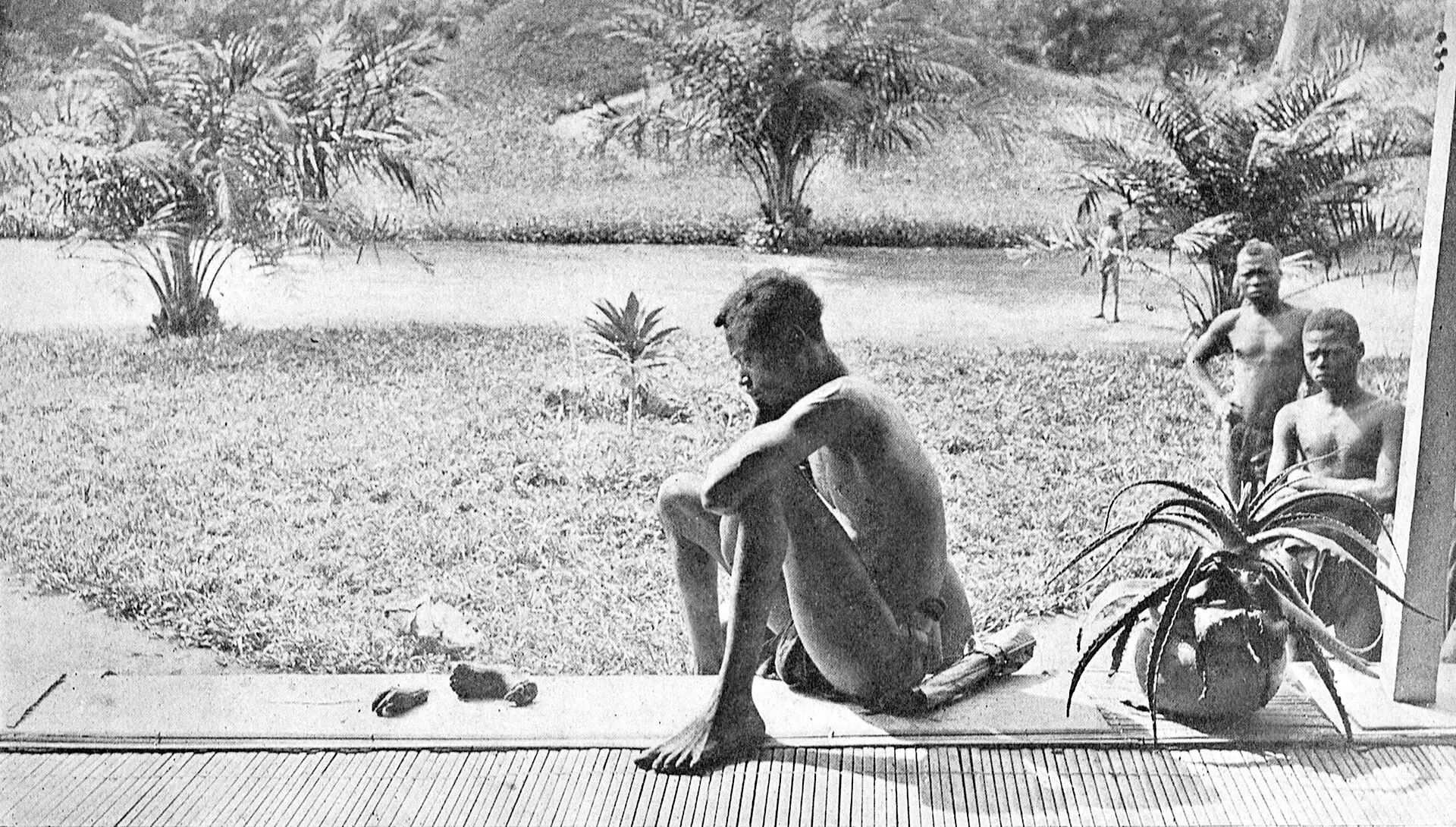
The searing image of Nsala of Wala looking at the severed hand and foot of his five-year-old daughter became a globally recognizable symbol of the regime’s brutality.
C. The Annexation and Leopold’s Extraction (1908)
The mounting pressure from the CRA and diplomatic maneuvers by major powers, including the United States, Britain, France, and Germany, ultimately led to the collapse of Leopold’s absolutist rule. In 1906, the Belgian Parliament voted in principle to seize the state from the King. The formal annexation, transitioning the territory into the Belgian Congo, occurred in November 1908.
Despite international condemnation and the necessity of transfer, the exit process underscored the profound lack of accountability for Leopold II. The king successfully insisted on being paid to relinquish his rights, transforming the transfer of sovereignty into a massive personal financial windfall—an “economic transaction” that purchased his exit. He extracted 110 million francs to cover his outstanding debts, 45 million francs for various building projects he had started in Belgium, and 50 million francs in future receipts from the Congo. Furthermore, prior to the annexation, Leopold deliberately destroyed many of the records detailing his administration, an action aimed at obfuscating the true scale of the crimes and complicating future historical inquiries. The process, therefore, secured a political change of governance but failed to deliver justice or accountability for the primary perpetrator.
VI. Conclusion: The Precedent Set and Enduring Legacy
The atrocities committed during the existence of the Congo Free State established a chilling precedent in the history of colonial exploitation and state violence. The CFS demonstrated, in stark detail, the genocidal potential inherent in the combination of absolute private ownership, unfettered capitalist exploitation (driven by commodity demand), and systematic coercion enforced by a private military apparatus.
While the annexation in 1908 led to the formal dissolution of the Red Rubber System and a noted decrease in the most severe abuses, it did not eliminate exploitation. Forced labor continued, and the extractive economic structures, shifting focus toward mining and plantations, remained in place under the new Belgian colonial administration. Although certain reforms were introduced, the legacy of institutional violence and economic dispossession persisted.
Critically, the historical damage inflicted by this period continues to resonate today. Academic studies indicate that regions historically exposed to the ruthless concession system of the CFS exhibit significantly worse long-term outcomes in crucial development metrics, including education, wealth, and health. The unique confluence of factors—the acquisition under a humanitarian guise, the structural dependence on forced labor for profit, the institutionalization of terror (mutilation and sexual violence) as a management tool, and the perpetrator’s successful monetization of his departure—solidifies the Congo Free State as a defining and cautionary chapter in the study of modern political economy, human rights, and the enduring consequences of colonial rule.
Citations
1. Formation and Governance under King Leopold II
- Congo Free State – Wikipedia
- Belgium Confiscates Congo Free State from King Leopold II – EBSCO Research Starter
- General Act of the Berlin West Africa Conference, 1885 – German Federal Foreign Office
- 1885: A European Colonial Dream and an African Nightmare – Origins (Ohio State University)
- The Belgian Congo – Lumen Learning
- Transferable Sovereignty: Lessons from the History of the Congo Free State – Duke Law Scholarship Repository
2. Atrocities and the Red Rubber System
- Atrocities in the Congo Free State – Wikipedia
- Red Rubber System and Forced Labour – Atrocities Watch Africa
- Sexual Violence as a Weapon of Colonial Control – ResearchGate
- A Forgotten Genocide: The Congo Free State – Sydney Criminal Lawyers
- Was There a Genocide in the Congo Free State? – Brepols Online
- How the Force Publique Enforced Terror – University of Canberra
3. Humanitarian Documentation and Advocacy
- Congo Free State, 1904: Humanitarian Photographs – German National Library
- Humanitarian Photographs of the Congo Free State, 1904 – HHR Atlas
- The Congo Report – Free the Slaves
- The Unbribable Witness: Crimes Against Humanity in King Leopold’s Soliloquy – University of South Florida
4. The Casement Report and International Reaction
- Casement Report – Wikipedia
- Report of the British Consul Roger Casement on the Administration of the Congo Free State – VIU
- Roger Casement and the Congo – The Journal of African History (Cambridge University Press)
- The Three Lives of the Casement Report – Breac (University of Notre Dame)


