
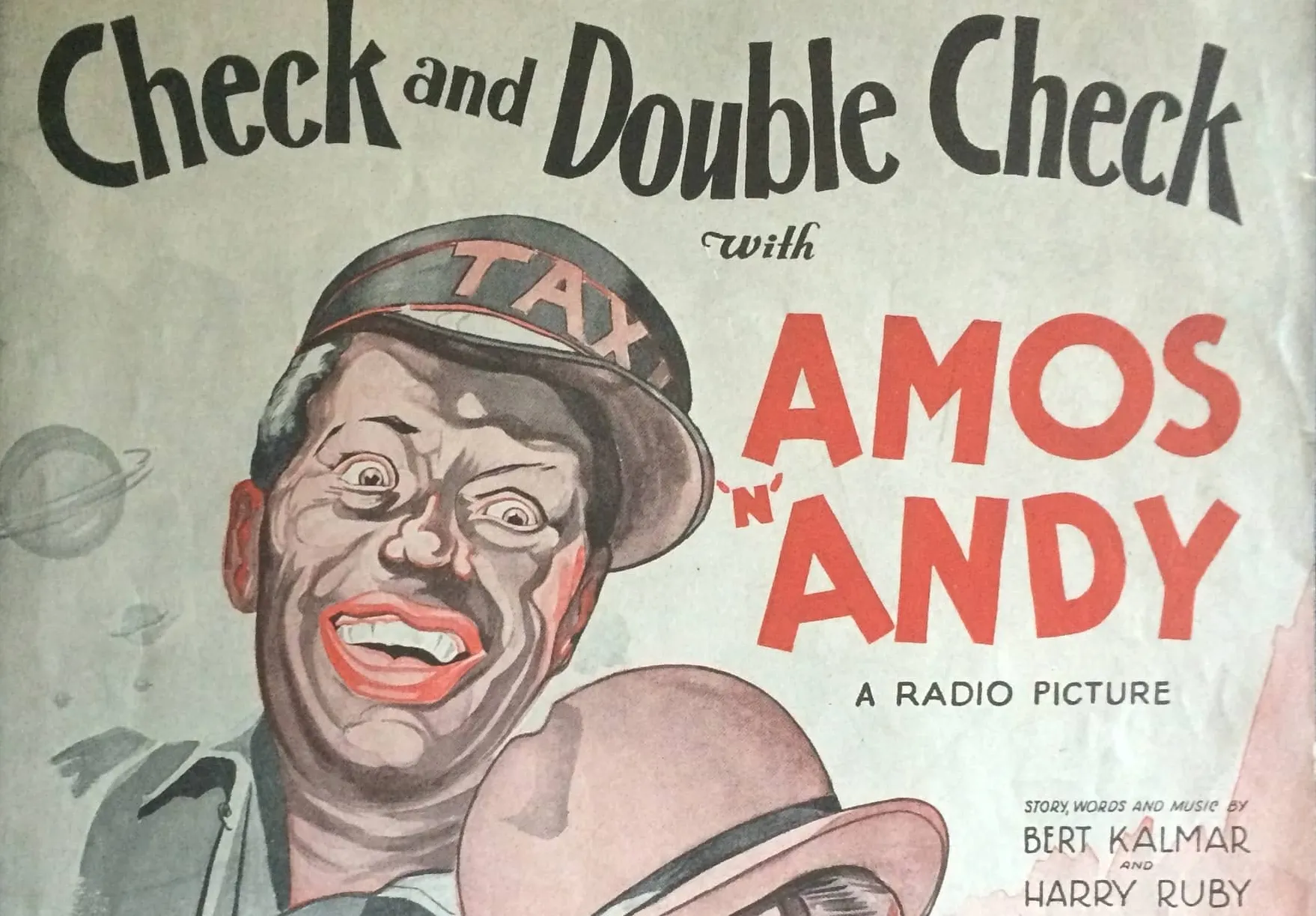

Amos ‘N’ Andy
When America Stopped to Listen: The Controversial History of Amos ‘n’ Andy

When America Stopped to Listen: The Controversial History of Amos ‘n’ Andy
Amos ‘n’ Andy stands as one of the most influential and controversial programs in American broadcasting history. At its 1930-31 peak, the show commanded 40 million nightly listeners—one-third of the entire U.S. population and 74% of all radio audiences—causing movie theaters to stop films mid-reel and telephone usage to drop measurably nationwide during its 15-minute broadcast. Yet this cultural juggernaut was also “blackface on the radio,” created and performed by two white actors using exaggerated Black dialect derived from minstrel show traditions. The paradox deepened when significant numbers of African American listeners embraced the show despite its stereotypes, creating divisions within the Black community that persist in scholarly debate today. From its origins in 1928 through its television cancellation in 1953 and final radio broadcast in 1960, Amos ‘n’ Andy pioneered serialized broadcasting, created the sitcom format, became television’s first series with an all-Black cast, and sparked civil rights protests that would help shape media representation for generations.
Two White Men from the South Meet in Durham
Freeman Gosden and Charles Correll met in Durham, North Carolina in 1920 (not Elizabeth City as sometimes reported), both working as traveling representatives for the Joe Bren Producing Company. This Chicago-based theatrical organization specialized in staging fundraising shows for fraternal organizations, civic groups, and lodges throughout the United States, partnering with the Kiwanis Club, Lions, American Legion, Elks lodges, and Shriners. The company provided complete theatrical packages including scripts, sketches, jokes, songs, costumes, scenery, and supervision, using local talent as performers while company representatives served as producers and directors.
Gosden, born May 5, 1899 in Richmond, Virginia, was the son of a Confederate Army veteran—one of 75 officers who refused to surrender at Appomattox. He grew up in a household steeped in Lost Cause ideology with direct experience of African American dialect and culture. He had served in the U.S. Navy during World War I as a wireless operator, which sparked his interest in radio technology. Correll, born February 2, 1890 in Peoria, Illinois, had southern ancestry on his father’s side; his great-grandmother was first cousin to Jefferson Davis, president of the Confederacy. He had worked as a stenographer and bricklayer before entering entertainment, aspiring to become an actor from youth. Correll learned Black minstrel dialect primarily through vaudeville performances rather than direct cultural contact.
After meeting in Durham, the two men began collaborating on Joe Bren productions, traveling extensively to stage amateur revues. In 1925, they moved to Chicago and began their first radio work on station WEBH with a program called “Correll and Gosden, the Life of the Party,” where they told jokes, sang, and played music (Correll on piano, Gosden on ukulele or banjo). They received minimal compensation initially—sometimes working just for a free meal—but the radio exposure was intended to lead to more lucrative stage work.
Sam ‘n’ Henry: The Prototype That Established the Format
On January 12, 1926, Gosden and Correll premiered their first groundbreaking radio show on WGN (owned by the Chicago Tribune). WGN management had asked them to adapt Sidney Smith’s popular comic strip “The Gumps” for radio, but the duo felt uncomfortable with the middle-class setting. Instead, they proposed their own “radio comic strip” featuring characters they created themselves: Sam Smith and Henry Johnson, two African Americans who migrated from rural Alabama and Birmingham to Chicago, reflecting the Great Migration of Southern Blacks moving north in the 1920s seeking opportunity.
The show ran as a daily 10-minute serial and is considered by historians to be the first situation comedy in broadcasting history. Gosden and Correll wrote, produced, and voiced all characters themselves, featuring continuing characters in an ongoing storyline—a novel concept for radio at the time. The show became an immediate hit throughout the Midwest. In 1926, the Chicago Tribune published a book containing 25 scripts from the first two months. From February 6, 1927 to October 2, 1927, the Chicago Daily Tribune printed scripts from episodes each Sunday.
Sam ‘n’ Henry ran from January 12, 1926 to December 18, 1927, with a final broadcast by the creators on January 29, 1928. In total, 586 episodes were produced by Gosden and Correll. But the partnership with WGN ended in dispute. In 1927, Gosden and Correll proposed a revolutionary concept: recording Sam ‘n’ Henry on phonograph records for distribution to other radio stations—what would become the first radio syndication, which they called a “chainless chain.” WGN rejected the concept. The duo quit over the dispute, but faced a critical obstacle: WGN owned the rights to the character names “Sam” and “Henry” and the show title. Gosden and Correll could not use these names when performing in personal appearances or on a new show.
The Birth of Amos ‘n’ Andy and the First Syndicated Radio Program
WMAQ (owned by the Chicago Daily News) offered Gosden and Correll higher salaries than WGN, full support for the syndication concept, and rights to create similar characters with new names. According to the creators, they heard two elderly African Americans greet each other with “Hello, Amos!” and “Hey there, Andy!” in a Chicago elevator, inspiring the names “Amos Jones” and “Andy Brown.” Character changes were minimal from Sam ‘n’ Henry: instead of leaving Birmingham, the characters now left Atlanta for Chicago.
The first broadcast of Amos ‘n’ Andy occurred on March 19, 1928 on WMAQ Chicago as a daily 15-minute serial. The show was pre-recorded on 78-rpm discs at Marsh Laboratories (operated by audio pioneer Orlando R. Marsh), and this recording technique enabled syndication to other stations. By August 1929, at least 70 stations carried syndicated recorded episodes, making it the first nationally syndicated radio program in American history.
The show’s explosive growth caught the attention of NBC, which picked it up for the NBC Blue Network on August 19, 1929, sponsored by Pepsodent toothpaste (a sponsorship that would last until 1937). The initial time slot was 11:00 PM Eastern time, but western complaints led NBC to arrange an unprecedented dual broadcast: 7:00 PM Eastern time for Eastern and Central zones, with a repeat at 11:30 PM for Mountain and Pacific zones. The full coast-to-coast debut came on November 28, 1929. At the start of the national run, characters were relocated from Chicago to Harlem, where the show would remain set for the rest of its existence.
A Cultural Phenomenon Unlike Anything Before or Since
The numbers documenting Amos ‘n’ Andy’s popularity remain staggering nearly a century later. Within just three months of going nationwide in 1929, 60% of all radio listeners were tuning in to the show. By the 1930-31 season, the audience had swelled to 40 million listeners—representing approximately one-third of the entire U.S. population of 123 million. This translated to 74% of the potential listening audience, a market penetration that has likely never been equaled by any other broadcast program. The show won top Crossley/CAB ratings for both the 1930-31 and 1931-32 seasons and remained the most popular program in its time slot until 1941.
NBC issued orders to only interrupt the broadcast for matters of national importance and SOS calls. President Calvin Coolidge regularly excused himself from state dinners to listen to the 15-minute nightly broadcast. President Herbert Hoover was also a devoted listener. Irish playwright George Bernard Shaw, when asked about visiting the United States, said: “There are three things I shall never forget about America—the Rocky Mountains, Niagara Falls, and Amos ‘n’ Andy.”
The show fundamentally altered American daily habits in ways both measurable and remarkable. Movie theaters stopped their featured films for 15 minutes to pipe in the show through theater sound systems or from radios placed on stage, and theaters advertised this practice until NBC charged them with copyright infringement. Telephone activity declined nationally during the 15-minute broadcast in ways measurable across the entire national telephone system. Sewers in many cities ran dry between 7:00 and 7:15 PM because people wouldn’t leave their radios even for bathroom breaks during the broadcast. Department stores played the program over loudspeakers so shoppers could listen while browsing. Work schedules were altered so employers and employees could tune in together. National conventions and local gatherings interrupted proceedings so attendees wouldn’t miss episodes.
The show spawned a massive merchandising empire including comic strips, 5-cent Amos ‘n’ Andy candy bars, Fresh Air Taxicab toys, character dolls, greeting cards, and books. Victor Talking Machine Company secured a recording contract. In 1930, RKO produced a feature film “Check and Double Check” with Gosden and Correll performing in blackface, earning $260,000 at the box office. When dramatic storylines captivated audiences—such as Andy’s romance with Madame Queen in 1930-31, or Ruby’s near-death from pneumonia in spring 1931—newspapers printed recaps and the program was frequently mentioned in the Congressional Record. 2.4 million fans wrote in suggesting names for Amos and Ruby’s newborn daughter. Fans threatened to boycott sponsor Pepsodent if Ruby was allowed to die.
Catchphrases from the show entered American vernacular: “Holy Mackerel!” (or “Holy mack’el!”), “Check and Double Check,” “I’se regusted” (disgusted), and “Buzz me, Miss Blue.” Louisiana governor Huey P. Long took his famous nickname “The Kingfish” directly from the show. Sales of radio sets increased dramatically during this period, credited partly to people wanting to hear Amos ‘n’ Andy. By 1933, three-fourths of all radio sales were inexpensive table models ($12-20), partly driven by desire to hear the show. Pepsodent sales ballooned during the sponsorship, proving the viability of radio advertising and causing other sponsors to rush into radio broadcasting.
The Writing That Captivated a Nation
According to broadcast historian Elizabeth McLeod, “Working alone in a small studio, Correll and Gosden created an intimate, understated acting style that differed sharply from the broad manner of stage actors—a technique requiring careful voice modulation, especially in the portrayal of multiple characters.” The duo voiced over 170 distinct male characters during the first decade, pioneering microphone techniques by varying distance and angle to create the illusion of multiple characters in a space. They performed cold without rehearsal, finishing scripts just before airtime.
McLeod further noted: “Above all, Correll and Gosden were gifted dramatists. Their plots flowed gradually from one into the next, with minor sub-plots building in importance until they took over the narrative and then receding to give way to the next major sequence; seeds for future storylines were often planted months in advance.” This complex serialized storytelling technique, adapted from comic strip narrative style, became the standard method for serial drama that endures to the present day as the foundation of both situation comedies and soap operas.
Despite dialect and racial stereotypes, characters had emotional depth. Amos—honest, hardworking, naive—became a dedicated family man after marrying Ruby Taylor in 1935. Andy was the gullible, overconfident dreamer who tended to let Amos do the work. The Kingfish (George Stevens) was the smooth-talking hustler with endless get-rich-quick schemes, always plotting to separate Andy from his money. Supporting characters included Brother Crawford (industrious but long-suffering family man), Madame Queen (Andy’s girlfriend), Lawyer Algonquin J. Calhoun (the “shyster” lawyer), Lightnin’ (the slow-moving janitor), Sapphire Stevens (Kingfish’s level-headed wife), and Mama (Sapphire’s openly hostile mother-in-law).
The humor combined situational comedy with wordplay and character dynamics. The Kingfish would devise elaborate schemes to swindle Andy, who despite being repeatedly duped kept coming back. Sample dialogue captured the wordplay: When teaching Andy to fly, Kingfish asked, “Andy, the first thing you need to fly is excellent eyesight. Now, how much is 10 plus 10?” Andy replied “20.” Kingfish continued: “Ok; now, what is ten times 2?” Andy: “20.” Kingfish concluded: “Oh, you see Andy; you has twenty-twenty vision.” Malapropisms abounded, such as the Kingfish thanking brothers for their “infernal gratitude” in the words of “that great American poet Ralph Walnut Emerson.”
The show balanced comedy with genuine drama. Many plotlines in the early period leaned far more to straight drama than comedy, with cliffhanger endings creating suspense that kept audiences returning every night. Traditional Christmas shows featured Amos reciting the Lord’s Prayer to his daughter Arbadella. The series, as McLeod wrote, “celebrated the virtues of friendship, persistence, hard work, and common sense, and as the years passed and the characterizations were refined, Amos ‘n’ Andy achieved an emotional depth rivaled by few other radio programs of the 1930s.”
Thirty-Two Years on the Air: Adaptation and Survival
Amos ‘n’ Andy ran on radio for 32 years, from 1928 to 1960, making it one of the longest-running programs in broadcasting history. The final broadcast occurred on November 25, 1960. The show’s longevity resulted from continuous adaptation to changing radio landscapes through three distinct format eras.
The nightly serial format (1928-1943) consisted of 15-minute episodes, 5-6 nights per week, running from March 19, 1928 to February 19, 1943. Approximately 4,091 episodes were produced in this format. This era featured intimate, character-driven drama with comedy, continuing storylines with cliffhanger endings, and all characters voiced by Gosden and Correll (though beginning in 1935, actresses started voicing female characters). Production moved from Chicago’s Merchandise Mart to Hollywood in late 1935. In 1935, the show officially transferred from NBC Blue Network to NBC Red Network. On April 3, 1939, it switched to CBS network when sponsor Campbell’s Soup (which had replaced Pepsodent in 1938) exercised its closer relationship with CBS.
The weekly situation comedy format (1943-1955) marked a major transformation. Beginning in October 1943 on NBC, the show expanded to a half-hour format with a studio audience added for the first time, full supporting cast of actors (many African American), orchestra accompaniment, and more exaggerated characterizations. Sponsors included Rinso detergent (1943-50) and Rexall drugstores (1950-54). This format proved the show’s adaptability as radio evolved.
The Amos ‘n’ Andy Music Hall (1954-1960) returned to a daily format in 1955 as an early evening half-hour show that included playing recorded music between sketches with occasional guest appearances. CBS television sets served as sponsor (1954-55). By 1960, television had largely replaced radio as the primary entertainment medium, and the show’s popularity had declined significantly from its peak. The television version (1951-53) had faced intense NAACP protests and been cancelled. The changing racial climate made the show increasingly controversial. The final broadcast occurred without much fanfare.
Gosden and Correll voiced the central characters for the entire 32-year run. On the 30th anniversary broadcast (March 19, 1958), they used their real voices and real names for the only time in the show’s history. After radio ended, they created an animated TV series “Calvin and the Colonel” (1961-1962), avoiding controversy by using animal characters. Both were inducted into the National Association of Broadcasters Hall of Fame in 1977. Charles Correll died September 26, 1972. Freeman Gosden died December 10, 1982.
The Paradox That Divided Black America
Here lay one of the most complex and controversial aspects of American entertainment history: a show that was essentially “blackface on the radio”—two white actors using exaggerated Black dialect derived from minstrel traditions—enjoyed significant popularity among African American audiences. The paradox created deep, lasting divisions within the Black community that persist in scholarly debate nearly a century later.
Evidence of substantial Black listenership was extensive and undeniable. At the Chicago Defender’s 1931 picnic, the prominent Black newspaper invited Gosden and Correll as guests of honor. An estimated 35,000 people attended (Time magazine reported 6,000), Duke Ellington’s Cotton Club band performed, and the audience applauded when they recognized the show’s theme song. A 1951 Advertest survey found 75% of 365 Black respondents disagreed that Amos ‘n’ Andy reinforced stereotypes. An unauthorized 1951 poll of 244 Blacks in New York and New Jersey found 75% enjoyed the show, 11.1% praised the “good cast,” and only 18.8% expressed outright objection. Baltimore bridge tournament participants rushed home to catch episodes. Working-class Black listeners across the nation made it a regular part of their evening routine.
Harvard professor Henry Louis Gates Jr. recalled decades later: “And everybody loved Amos ‘n Andy – I don’t care what people say today….Nobody was likely to confuse them with the colored people we knew…” He noted it was “a sad day” in his hometown of Piedmont, West Virginia, when the show was banned. UC professor Patricia Davis recalled her relatives’ excitement “when blacks first showed up on tv — it didn’t matter that it was Amos ‘n’ Andy. It was just a confirmation that there were blacks in the world.” Rev. Jesse Jackson later reflected: “Black people had enough sense to appreciate them as funny people playing out roles. Their roles were so limited we laughed at them and laughed at their roles… But at the same period all this was on TV out came Martin King, Malcolm X, Adam Clayton Powell, Jr., and Howard Thurman.” Julian Bond, NAACP chairman, explained: “If we could not laugh during slavery and Jim Crow we would go nuts.”
Multiple theories explain why African Americans embraced a show that featured white actors performing racial stereotypes. The “only representation” hypothesis remains the most frequently cited: Amos ‘n’ Andy was often the only representation of African Americans on mainstream radio, and the TV version (1951-1953) was the first and only program with an all-Black cast for 15 years until “Julia” in 1968. Any representation, even flawed, was seen as better than total invisibility in mass media. As one scholar noted, it provided “confirmation that there were blacks in the world.”
Comedy as survival and subversion offered another explanation. Sociologist Mary Pattillo observed that “comedy in the black community is almost always about struggle.” Activist Julius Lester wrote: “Kingfish has a joie de vivre no white person could poison, and we knew that whites ridiculed us because they were incapable of such elan. I was proud to belong to the same race as Kingfish.” Some scholars argue Black audiences interpreted the humor differently than whites—finding subversive resistance in Lightning’s slowness (“dragging his feet, not obeying”) or laughing at the absurdity rather than accepting the stereotypes. Evidence suggests Black and white audiences laughed at different things and for different reasons.
Recognition of universal comedy transcending race also played a role. Characters resembled other popular comic dupes of the era like Laurel and Hardy, Abbott and Costello, and Ralph Kramden. The scheming-and-the-gullible dynamic was familiar across entertainment. Many working-class Blacks found the characters relatable as fellow strivers during the Great Depression. Gosden and Correll were recognized as talented dramatists who created emotionally complex storylines that resonated with universal themes of friendship, money troubles, romance, and ambition.
Employment for Black actors became crucial during the television era, when the show provided substantial work for Black actors including Tim Moore, Spencer Williams, Alvin Childress, Ernestine Wade, and Amanda Randolph. The Negro Actors’ Cooperative Guild charged the NAACP with causing unemployment of Black actors. For some, it represented the “best job they ever had.” Finally, despite lacking education and steady employment, Kingfish and Andy lived among middle-class neighbors, dressed in suits, and socialized with elites—representing aspirational fantasies for working-class Black audiences during the Great Migration. If two “country bamas” could make it in the big city, so could viewers.
Early Protests and the Class Divide
The controversy began almost immediately, revealing deep class and regional divisions within Black America. In December 1930, Chicago’s Bishop W.J. Walls of the African Methodist Episcopal Zion Church published an article in Abbott’s Monthly criticizing “lower-class, crude behavior” in the show, objecting to “crude, repetitious, and moronic” dialogue. He did not find humor in white men “misappropriating black humor.”
The most significant early protest came in 1931 from The Pittsburgh Courier, the second-largest Black newspaper. Editor and publisher Robert L. Vann launched a six-month attack on the series, calling for a national day of protest and organizing a petition drive seeking one million signatures. The campaign ultimately collected approximately 750,000 signatures (falling 400,000 short of the goal) and submitted the petition to the Federal Radio Commission complaining about racist stereotyping. The charges stated the show was “detrimental to the self-respect and general advancement of the Negro.” Specific objections included characters’ misuse of the English language and the depiction of the “Mystic Knights of the Sea” lodge as shady, which cast aspersions on real Black fraternal organizations crucial to community uplift. The 1931 protests gained support from the National Baptist Convention, annual convention of Black Elks, and National Association of Colored Waiters and Hotel Employees.
In stark contrast, the Chicago Defender—another major Black newspaper—actively supported the show, inviting Gosden and Correll as guests of honor at their 1931 community picnic and lauding the show’s “wholesome themes and good-natured humor.” Remarkably, the same newspaper that honored the white creators in 1931 refused to invite the all-Black TV cast in 1951, reflecting evolving middle-class attitudes and growing influence of respectability politics.
The early protests largely failed. Most Blacks in the 1930s were preoccupied with Depression-era survival and Jim Crow violence. The NAACP national office chose to refrain from joining the boycott (though local branches varied), and the organization lacked the size and strength it would gain after World War II. Radio’s audio-only format allowed racial ambiguity that television would eliminate. A 1932 survey of “Negro adult leaders” confirmed opinions ranged from “sheer delight to marked resentment and emphatic disapproval.”
The pattern revealed class-based divisions that would persist throughout the show’s history. Middle-class and elite Blacks—particularly professionals like doctors and lawyers who objected to portrayals of Black professionals as incompetent—were most offended and concerned about respectability and white perceptions. Working-class Blacks valued entertainment, relatability, and were less concerned about the white gaze. They appreciated seeing Black faces on screen regardless of how they were portrayed.
Television Brings Visual Reality and Organized Resistance
The transition from radio to television marked a historic turning point. CBS premiered the television version on June 28, 1951 at 8:30 PM, produced at Hal Roach Studios and sponsored by Blatz Brewing Company. The show was among the first television series filmed with a multicamera setup, four months before I Love Lucy. It became the first television series with an all-Black cast and the only one of its kind on prime-time network television for nearly 20 years.
Gosden and Correll, hired by CBS as producers, conducted an extensive nationwide talent search from 1946 to 1950. They initially aspired to voice the characters while Black actors performed and lip-synced, but realized they were visually unsuited for the roles. The crucial casting change to actual Black actors made television history, though actors were instructed to keep their voices and speech patterns close to those Gosden and Correll had used on radio. This created an uncomfortable dynamic: a white man teaching Black actors how to perform characters white men had created. When director Gosden coached actor Spencer Williams on dialect, Williams—a pioneering filmmaker who had produced “race films” for Black audiences—replied that he “ought to know how Negroes talk, having been one all my life.”
Alvin Childress (1907-1986) played Amos Jones, the mature, hardworking, conservative, level-headed cab driver who served primarily as narrator. Born in Meridian, Mississippi, educated at Rust College with a degree in sociology, Childress had worked with Harlem’s Lafayette Players and the American Negro Theater. He originally auditioned for Kingfish but was cast as Amos. Spencer Williams Jr. (1893-1969) played Andrew Hogg “Andy” Brown, the gullible friend constantly duped by Kingfish’s schemes. Williams was a WWI veteran with extensive experience as a writer, producer, and director of independent Black films. He reportedly clashed with Gosden over Andy’s characterization. Tim Moore (1887-1958) played George “Kingfish” Stevens, the scheming con artist who constantly hatched get-rich-quick schemes. Moore was a vaudeville veteran who had toured with the minstrel show “Cora Miskel and Her Gold Dust Twins.”
Supporting cast included Ernestine Wade as Sapphire Stevens (Kingfish’s wife), Amanda Randolph as Ramona “Mama” Smith (Sapphire’s mother), Johnny Lee as Algonquin J. Calhoun (the lawyer), Nick Stewart as Lightnin’ (the janitor), Lillian Randolph as Madame Queen, and Jane Adams as Ruby Jones (Amos’s wife). Many episodes were written by Joe Connelly and Bob Mosher, who later created “Leave It to Beaver” and “The Munsters.”
The TV version differed significantly from radio. Character focus shifted with Amos becoming peripheral while Kingfish and Andy took center stage. The location remained Harlem. The show added a studio audience for the first time, orchestra accompaniment, and a new theme song (Gaetano Braga’s “Angel’s Serenade”). The later radio program and TV version were considered “advanced for the time,” depicting Blacks in various roles including successful business owners, managers, professionals, and public officials, though critics argued these professional portrayals were often negative. The traditional Christmas show featuring Amos reciting the Lord’s Prayer to his daughter was carried over to television.
The NAACP Campaign and the Seven Charges
CBS’s decision to premiere the series during the week of the NAACP’s 42nd annual convention in Atlanta in July 1951 proved a critical tactical error. Convention delegates viewed the show and were outraged. The NAACP’s response was dramatically different from the 1930s radio protests because the context had fundamentally changed. NAACP membership had increased tenfold during the 1940s. By 1948, Black leaders were “making waves in American journalism and entertainment.” President Truman appointed a Civil Rights Commission and declared 1949 a “Year of Rededication” to racial equality. The liberal concept of full integration had captured the American conscience. A new political consciousness had emerged within Black America about the importance of image, particularly as the Brown v. Board of Education case approached (1954). Visual images on television had far greater impact than radio voices.
On July 7, 1951, Gloster B. Current, Director of NAACP Branch and Field Services, sent a memorandum to the executive committee notifying them that the annual convention had voted to condemn both Amos ‘n’ Andy and The Beulah Show. The NAACP filed suit against CBS attempting to get an injunction to stop the show from airing. On August 15, 1951, the NAACP published a bulletin titled “Why The Amos ‘n’ Andy TV Show Should Be Taken Off The Air” with seven specific charges:
- “It tends to strengthen the conclusion among uninformed and prejudiced people that Negroes are inferior, lazy, dumb, and dishonest.”
- “Every character in this one and only TV show with an all Negro cast is either a clown or a crook.”
- “Negro doctors are shown as quacks and thieves.”
- “Negro lawyers are shown as slippery cowards, ignorant of their profession and without ethics.”
- “Negro women are shown as cackling, screaming shrews, in big mouthed close-ups, using street slang, just short of vulgarity.”
- “All Negroes are shown as dodging work of any kind.”
- “Millions of white Americans see this Amos ‘n’ Andy picture of Negroes and think the entire race is the same.”
The NAACP Metropolitan Youth Committee implemented a comprehensive strategy: gaining support of clergy and businessmen, distributing leaflets outlining pros and cons, circulating petitions calling for cancellation and inclusion of Blacks in all phases of television production, sending letters to sponsors explaining their position, and organizing boycotts of show sponsors. On July 18, 1951, the president of Spicer Furniture Company (an NAACP executive board member) sent letters to all stores ordering discontinuation of sponsorship. On July 27, 1951, WTMJ-TV Milwaukee (ironically, home to sponsor Blatz Brewing Company) banned the series under pressure from the Milwaukee NAACP branch.
The boycott gained widespread support from Black church organizations, Black GIs serving in Korea, college students, YMCA, League of Women Voters, Congress of Industrial Organization (CIO), American Federation of Labor (AFL), United Hatters, Cap and Millinery Workers International Union, Improved Benevolent Protective Order of Elks of the World, Interstate United Newspapers, and Jackie Robinson. In February 1952, Congress of Racial Equality (CORE) began picketing CBS offices. Edwin Lukas, director of the American Jewish Committee Civil Rights Program, met with CBS Vice President in August 1951 to discuss solutions, proposing that characters speak correct English at the end of each episode to remind audiences they were acting. The NAACP rejected this compromise.
Opposition to the boycott persisted. The Pittsburgh Courier, which had led protests against the radio show in 1931, now defended the TV version in June 1951. The Negro Actors’ Cooperative Guild charged the NAACP with precipitating Black actor unemployment. Many cast members defended the show. Alvin Childress argued: “I didn’t feel it harmed the Negro at all… Actually the series had many episodes that showed the Negro with professions and I thought it was quite well done.” The unauthorized poll showing 75% of Blacks enjoying the show revealed continued divisions within the Black community.
Cancellation, Syndication, and the Long Disappearance
Despite high ratings—the show ranked #13 in Nielsen ratings for 1951-1952 and #25 for 1952-1953—Blatz Beer withdrew sponsorship in April 1953 under NAACP boycott pressure. CBS announced that “the network has bowed to the change in national thinking.” The final network episode aired in June 1953. Total production included 65 episodes during the initial CBS run, with an additional 13 episodes produced that had been intended for the 1953-54 CBS season but were released to syndication instead.
Historian Melvin Patrick Ely argued the cancellation resulted less from Black pressure than from falling ratings due to programming changes, noting that CBS, Blatz, and local TV managers knew the NAACP boycott had failed because the Black population itself remained deeply divided on the show. Multiple factors contributed: NAACP boycott pressure on sponsors, ratings decline, changing climate for race relations post-WWII, fear among advertisers of being too closely associated with Black people, concern about southern white market backlash, and “organized consumer resistance” fears among advertisers.
The aftermath proved more remarkable than the cancellation. The show remained in syndication for 13 years (1953-1966)—more than four times longer than its network run—airing in 218 U.S. markets plus Australia, Bermuda, Kenya, and Western Nigeria. The BBC purchased the series and aired it 1954-1957, making it the first American sitcom in Britain, despite an April 7, 1954 NAACP letter urging them not to air it. As late as 1963, the show still played on 50 U.S. stations and earned solid ratings throughout the syndication period.
In 1963, CBS sold reruns to Kenya and Western Nigeria; Kenya banned the show immediately. In 1964, a Chicago television station announced reruns, prompting widespread bitter protests. The context had shifted dramatically: in 1961-1963, the NAACP launched major protests against television and film industries’ discriminatory hiring practices, prompting Congressional investigation. In June 1963, NAACP national labor secretary Herbert Hill threatened to decertify Hollywood’s unions with the National Labor Relations Board unless the industry cleaned up portrayals of Blacks beyond servant, maid, and slave roles.
In 1966, CBS withdrew Amos ‘n’ Andy from domestic and overseas sales “as quietly as possible” as its market suddenly disappeared. CBS legal department issued “no comment” when asked if this was due to pressure, though civil rights pressure was clearly a factor. The episodes were locked in CBS vaults, banned from television, home video, and eventually internet from 1966 to 1983 (with a brief exception for a 1983 documentary). Unlicensed bootleg VHS and DVD sets became widely available by the 1990s, typically including 70-74 of the 78 total episodes. In 1998, CBS initiated copyright infringement suits against companies selling videos. In 2012, Rejoice TV (an independent Houston network) started airing the show weeknights—the first nationwide broadcast since 1966. When Rejoice TV folded in 2018, the series was pulled from widespread distribution again. No official licensed DVD or Blu-ray compilations have been released.
The cast members’ post-show careers illustrated the cost of the controversy. Alvin Childress found himself typecast and unable to find acting work, briefly working parking cars at a Beverly Hills restaurant before landing small roles on Perry Mason, Sanford and Son, Good Times, and The Jeffersons. He died April 19, 1986 in Inglewood, California. Spencer Williams did very little work after the show, appeared in a 1958 LA production of “Simply Heavenly,” and had his last credited role in a 1962 Italian horror film. He lived off his military pension and died December 13, 1969 at Sawtelle Veterans Administration Hospital from a kidney ailment. His New York Times obituary mentioned Amos ‘n’ Andy but made no mention of his pioneering film director work. Tim Moore made numerous public appearances including guest spots on Jack Paar’s Tonight Show and Paul Coates Show. He died December 13, 1958 in Los Angeles, only five years after the show ended.
A Legacy That Refuses Simple Judgment
Amos ‘n’ Andy’s place in American entertainment history remains undeniable and multifaceted. The show pioneered the situation comedy format, created the first radio syndication system with its “chainless chain” concept, established serialized storytelling techniques that became standard for all dramatic broadcasting, and proved the commercial viability of sponsored radio programming. It altered entertainment habits nationwide, commanded unprecedented audience share, influenced politicians (Huey Long took his nickname from it), and entered American vernacular with catchphrases still recognized today. On television, it became the first network series with an all-Black cast in lead roles, won an Emmy Award in 1952, and employed Black actors in an era of near-total exclusion.
Yet its place in the history of race relations and media representation proves equally significant and far more troubling. The show had deep roots in minstrel show traditions and Confederate nostalgia. Its creators applied stereotypes dating to the 1830s “Jim Crow” caricature tradition. The characters embodied classic minstrel archetypes: the “Tom” (Amos), the “coon” (Kingfish and Andy), the “mammy/Sapphire” (Sapphire and Mama), and the “shyster” (Calhoun). The show represented what scholars call “aural blackface,” with white actors using exaggerated Black dialect for entertainment and profit.
The divisions within the Black community that the show created from 1931 through its cancellation in 1953 revealed fundamental tensions in African American identity and strategy. Working-class Blacks largely enjoyed the show as entertainment and valued seeing Black faces on screen regardless of portrayal. Middle-class and elite Blacks worried about respectability, white perceptions, and the impact on Civil Rights Movement arguments for equality. The concept of “respectability politics” shaped elite responses—the belief that material and moral “progress” and “proper” representation would defeat racism. The “dirty laundry theory of racial politics” held that anything making the race “look bad” must remain hidden from white audiences. W.E.B. Du Bois’s concept of “double-consciousness”—always being mindful of the white gaze—framed these debates. Bill Cosby later admitted shows like Amos ‘n’ Andy were “fine for blacks to enjoy and laugh at amongst one another” but “inappropriate to watch in the company of white people.”
The show’s removal had unintended consequences that reverberate through television history. Networks reacted to the controversy by eliminating Black families from television entirely. A 15-year gap passed before the next African-American situation comedy (Julia in 1968). The successful campaign led to more than a decade of invisibility for Black family life on television. Employment opportunities for Black actors dried up. Fear of controversy led to avoidance of Black programming. As Rev. Jesse Jackson later reflected, the actors “paid the dues for future generations to receive more dignified roles.”
Yale historian Melvin Patrick Ely, in his definitive 1991 study “The Adventures of Amos ‘n’ Andy: A Social History of an American Phenomenon,” concluded: “It’s impossible to come up with a one-sentence verdict on ‘Amos ‘n’ Andy.’ It humanizes black characters and yet precisely by making its characters seem more real and human it made the racial stereotypes in the show seem more real, too.” He noted the show was “so rich and complex that it wins admirers ranging from ultra-racists to outspoken racial egalitarians.” Broadcast historian Elizabeth McLeod wrote that despite its problematic nature, “the series celebrated the virtues of friendship, persistence, hard work, and common sense, and as the years passed and the characterizations were refined, Amos ‘n’ Andy achieved an emotional depth rivaled by few other radio programs of the 1930s.”
Modern scholars continue grappling with questions the show raises: Can entertainment from this era be evaluated fairly by contemporary standards? How do we balance technical innovations with racial content? What does divided Black opinion about the show tell us about identity and representation? How has the show’s legacy influenced contemporary Black representation on television? The show remains crucial for understanding how, as scholar Michele Hilmes argued, “the development of radio is deeply involved with racial discourse, with the problem of the signification—and significance—of difference, in an ideologically contradictory and ethnically disunified society struggling for a common identity.”
Ely’s final assessment captures the enduring complexity: “Perhaps what many clearly remember most about ‘Amos ‘n’ Andy’ is what made it really shine and accounts for its longevity; something that can be hurtful but also, of course, splendidly healing: laughter.” From its birth in a Durham, North Carolina meeting between two white entertainers in 1920, through 32 years dominating radio, two controversial years on television, 13 years in syndication, decades locked in vaults, and continuing debates today, Amos ‘n’ Andy remains one of the most influential and controversial programs in American broadcasting history—a show that millions loved, millions protested, and that fundamentally shaped both the medium of broadcasting and the ongoing struggle over how Black Americans are represented in mass media.
Primary Reference Works
- Wikipedia – Amos ‘n’ Andy
- Wikipedia – Sam ‘n’ Henry
- Wikipedia – Freeman Gosden
- Wikipedia – Charles Correll
- Wikipedia – Alvin Childress
- Wikipedia – Spencer Williams Jr.
- Wikipedia – List of Most-Listened-to Radio Programs
Encyclopedia Sources
- Encyclopedia Britannica – Gosden and Correll
- Encyclopedia Britannica – Amos ‘n’ Andy Show
- Encyclopedia.com – Amos ‘n’ Andy (History)
- Encyclopedia.com – The Amos ‘n’ Andy Show (Media)
Academic & Research Sources
- EBSCO Research – Amos ‘n’ Andy Radio Show Goes on the Air
- Museum of Broadcasting – Amos ‘n’ Andy
- Jim Crow Museum – Amos ‘n’ Andy: Past as Prologue?
- Mark Freeman Films – Amos ‘n’ Andy: Past As Prologue
- Abernathy Magazine – Reflections on Black Image in Amos ‘n’ Andy
Television & Entertainment Industry Sources
- Television Academy Interviews – Amos ‘N’ Andy
- Radio Hall of Fame – Amos ‘n’ Andy
- IMDb – The Amos ‘n Andy Show Quotes
- EPGuides – The Amos ‘n’ Andy Show
Historical Archives & Collections
- Internet Archive – The Amos ‘n Andy Show
- Amos and Andy Official Archive – Pittsburgh Courier, 1931
- Amos and Andy Official Archive – NAACP Bulletin
- Amos and Andy Official Archive – Television Cast
Additional Historical Sources
- History.com – Original “Amos ‘n’ Andy” debuts on Chicago radio
- Drypigment – The Joe Bren Company and Minstrel Shows, 1916
- Jim Ramsburg – Radio’s Rulers: Crossley, Hooper & Nielsen
- AAIHS – The Pittsburgh Courier’s Discursive Power, 1910-1940
Books Referenced
- Goodreads – The Adventures of Amos ‘n’ Andy: A Social History of an American Phenomenon by Melvin Patrick Ely
- LoveReading – Audiobooks narrated by Freeman Gosden


